Seed beads usually come in tubes labelled 11/0, 8/0, 6/0, etc. I thought they were just spacers at first, but a million online tutorials later, I learned how to weave with them.
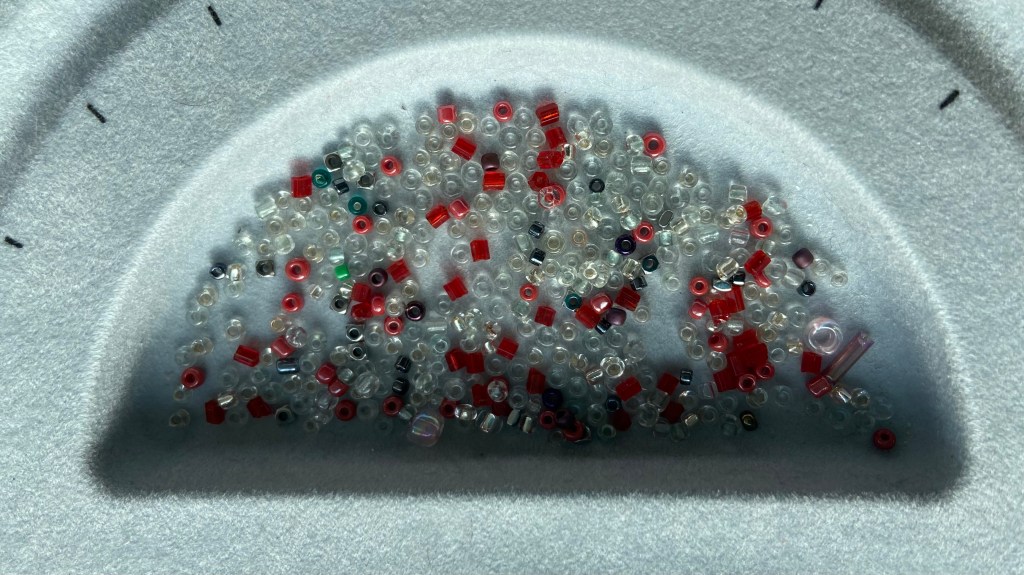
I started with a simple right-angle weave (RAW), which was a great starting-point for beginners like me, and later I jumped into bead looming. When I felt more comfortable, I watched tutorials about the different types of stitches, like the spiral rope stitch, brick stitch (pictured below), and square stitch.

Bracelet projects are the easiest for me right now. I tried making earrings once, but I got frustrated and tossed them across the room wasn’t ready yet. I’m so-so with necklaces.
Some basic starting materials:
- Beading Needles: I used regular sewing needles at first, but many broken beads later, I finally bought a pack of beading needles.
- Beading Thread: I don’t know enough about the different types of beading threads to recommend any one in particular, but, after some trial and error, I’ve had success with coated beading thread.
- Seed Beads: I started with 11/0, and threw some 8/0 into the mix. I have some unopened 15/0, but I’m nervous about working with such tiny beads.
- Beading Mat: If you’re like me, beads will get everywhere; under the couch, inside your shoes, etc. A beading mat, or tray, stops them from rolling all over the place.
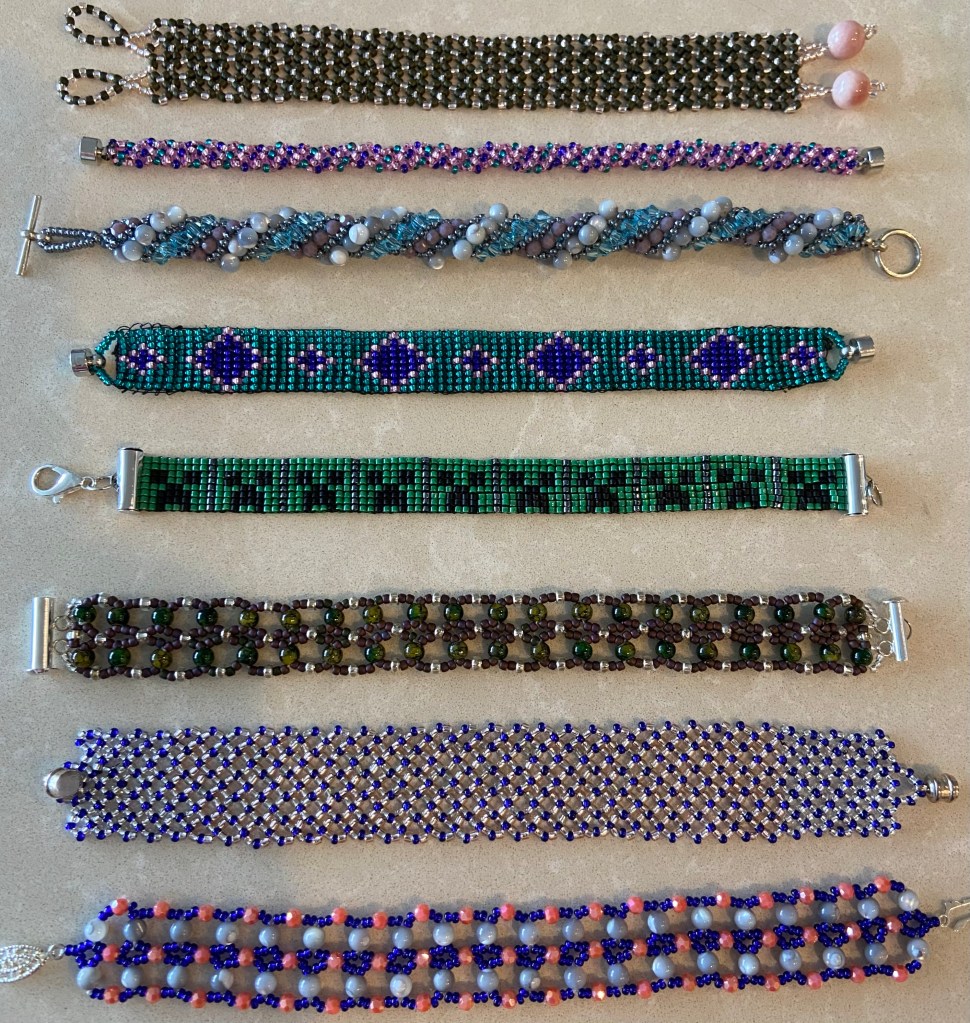
Here are a few things I’ve made:
Online tutorials worked for me, but there are plenty of great books, magazines, blogs, and forums out there. Some craft shops also host beginner workshops. Find what works best for you!
Just putting this out there into the world, so that I can hold myself accountable — I want to try making a pen-holder cup, a change purse, and a broach. I’m not saying when, so maybe it’ll be tomorrow, or in a few years, but one day I’ll do it!
For any art historians out there, I would love some book recommendations on the history of beading.
 Notes of Currant